Quick Answer
An Indian PCOS diet plan doesn't need quinoa, chia seeds or protein powder to work. Dal, roti and sabzi already supply the fibre, plant protein and steadier blood sugar response that research links to better insulin management in PCOS, since insulin resistance is the metabolic driver behind most PCOS symptoms in Indian women. What actually moves the needle is which atta goes into the roti, how much dal sits on the plate, and how the meal is proportioned, not switching to imported "superfoods."
Why Your Everyday Thali Already Has What a PCOS Diet Needs
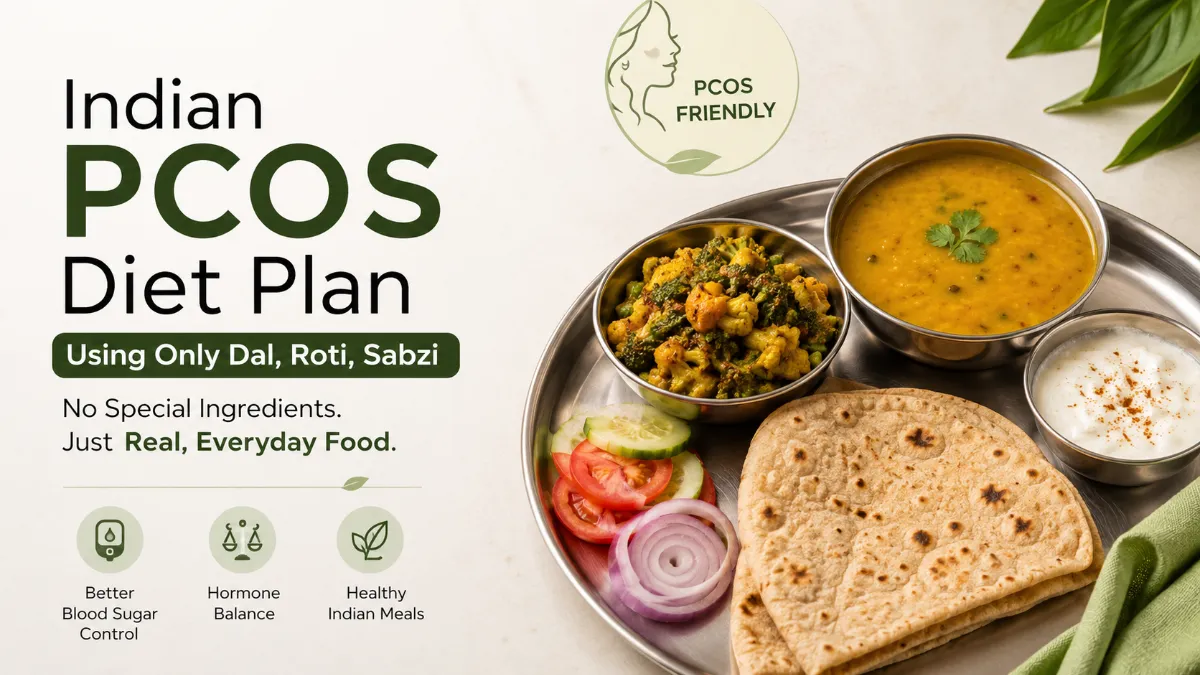
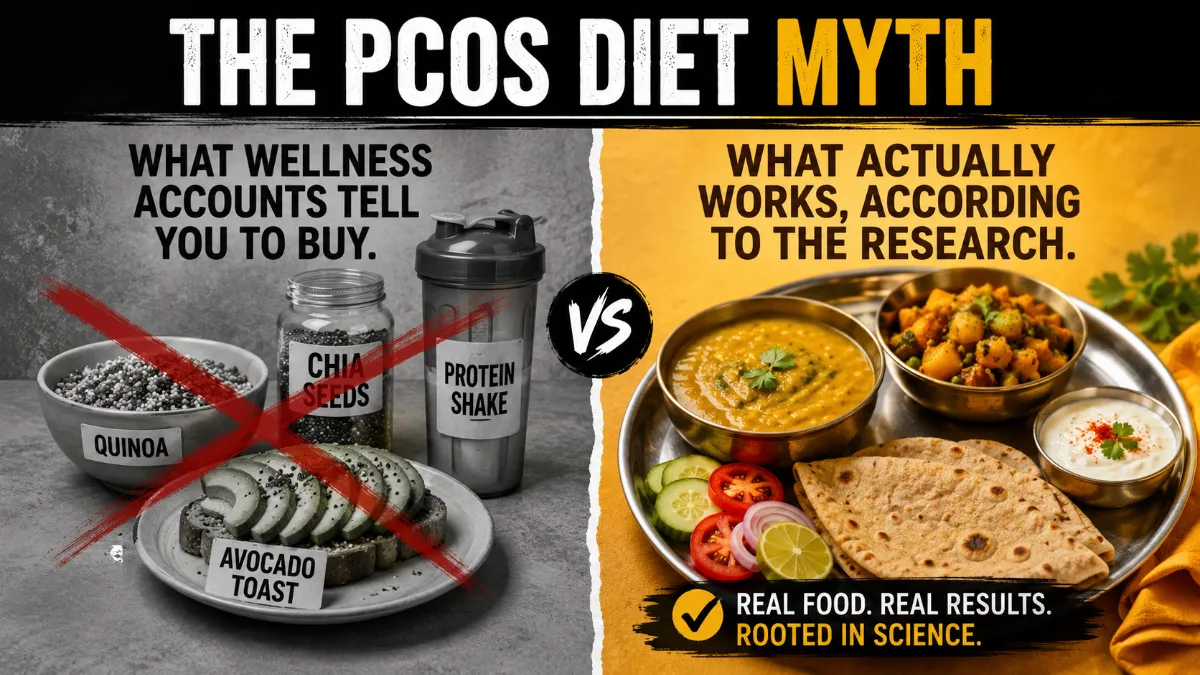
A plate of dal, roti and sabzi is not a diet you need to overhaul. It is closer to what most nutrition research on PCOS is actually pointing toward: a plant-forward plate with slow-digesting carbohydrates, whole legumes, and vegetables at every meal. The version sold online, full of quinoa bowls, avocado toast and imported protein powders, is not more effective for an Indian household. It is simply less familiar and more expensive.
I run diagnostic panels for a living, not consultations, so I won't tell you what to eat at every meal. What I can do is walk through what the research says about the foods already sitting in a typical Indian kitchen, and where small, specific changes to that same dal-roti-sabzi plate are supported by evidence.
This matters more in India than almost anywhere else. PCOS is not a niche condition here.
How Common Is PCOS in India, and Why Does Diet Matter So Much?
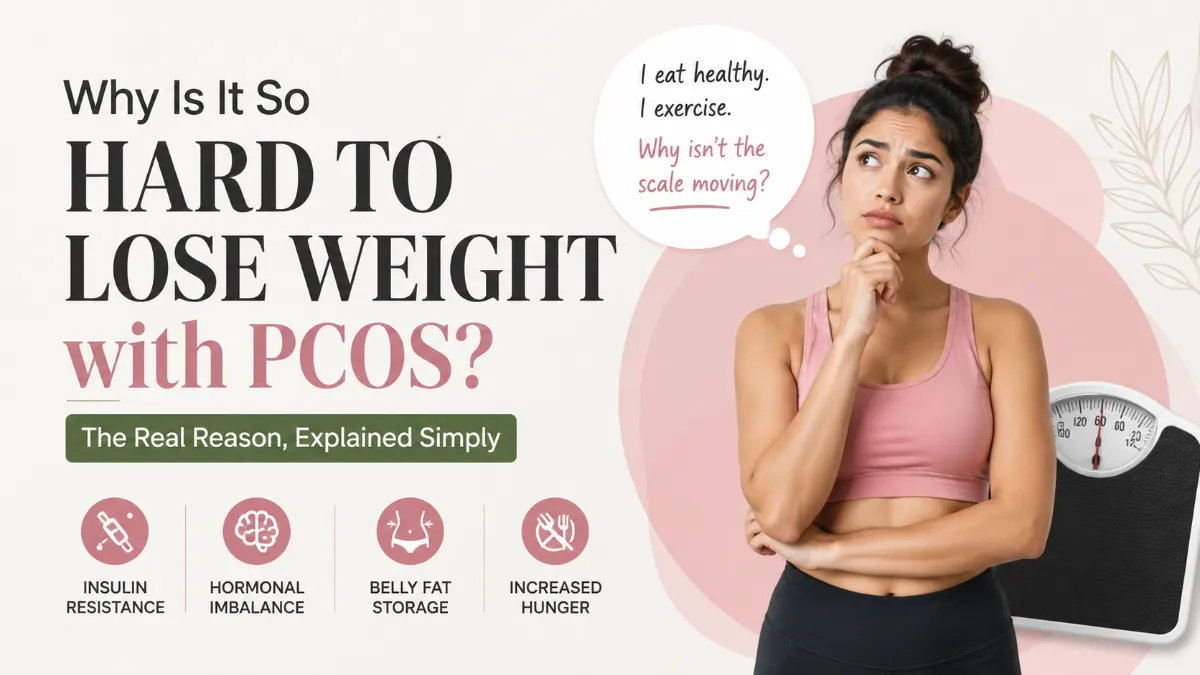
PCOS affects roughly one in five Indian women of reproductive age when measured against the Rotterdam criteria. The ICMR-PCOS task force study, published in JAMA Network Open in 2024 and covering 9,824 women aged 18 to 40 across India, found a national prevalence of 19.6% using Rotterdam criteria and 7.2% using the older NIH 1990 criteria. Among the women identified with PCOS in that study, 43.2% had obesity, 91.9% had some form of dyslipidaemia, and 32.9% had non-alcoholic fatty liver disease.
Insulin resistance sits underneath most of this. A 2025 meta-analysis in Frontiers in Nutrition puts the rate of insulin resistance at around 75% in lean women with PCOS and closer to 95% in women with PCOS who are also living with obesity. High circulating insulin is associated with higher ovarian androgen output, which is part of what drives symptoms like acne, irregular cycles and unwanted hair growth.
This is also why diet is not a side note in PCOS management. It's one of the few levers a person can pull daily, and unlike medication, it doesn't need a prescription to start. That doesn't mean diet replaces medical care. It means the food on the plate is doing real metabolic work, whether or not anyone is paying attention to it.
Rates also vary sharply by region. The same JAMA Network Open study found PCOS prevalence highest in Central and North India and lowest in Northeast India, and consistently higher in urban areas than rural ones across every diagnostic criterion tested. Urban living, in this context, usually means more sedentary routines and more refined, packaged food, both of which affect insulin sensitivity independently of genetics.
Which Atta Should Go Into Your Roti?
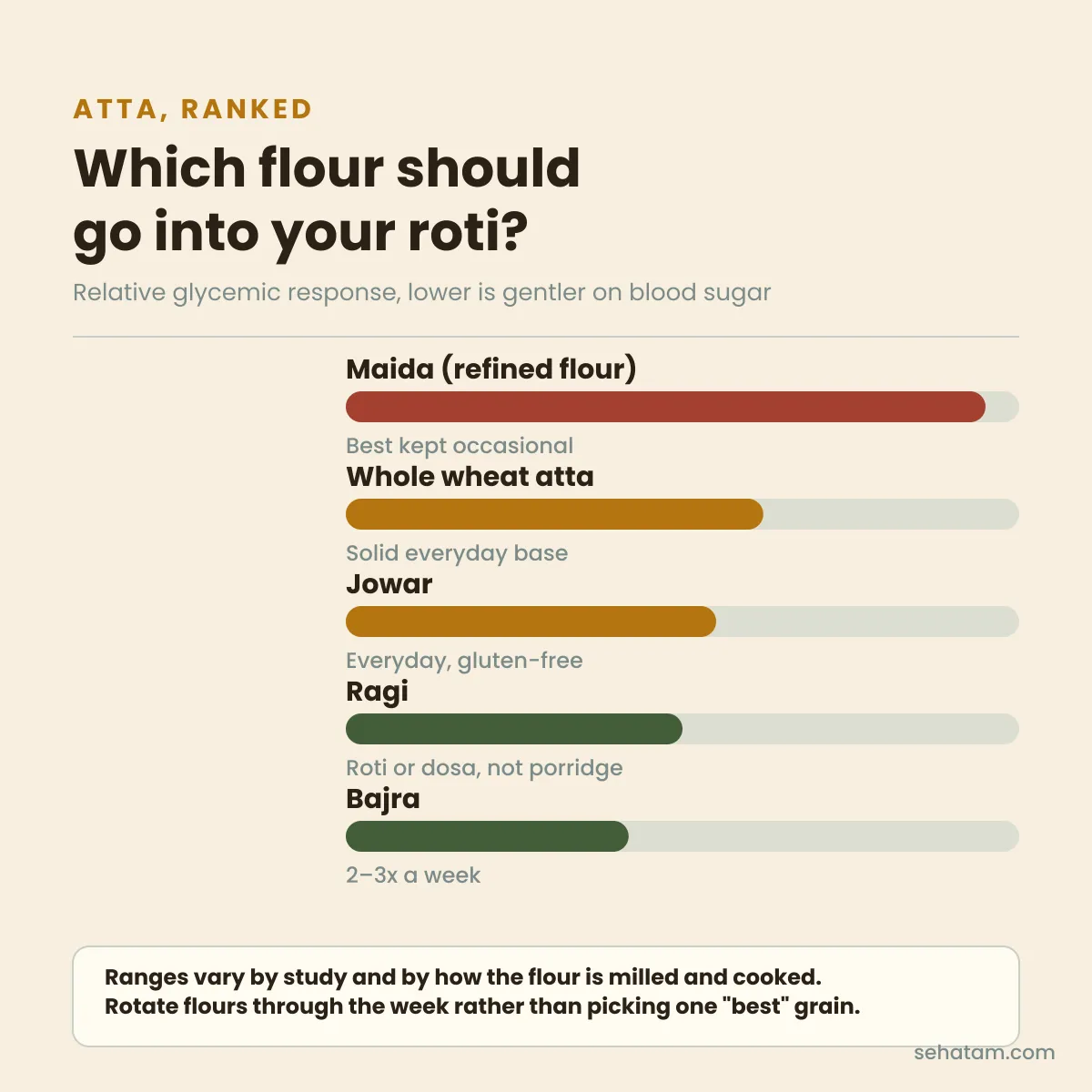
The roti itself is the single biggest lever in a dal-roti-sabzi plate, because it's eaten at nearly every meal and in larger quantity than the dal or sabzi next to it. Refined wheat flour (maida) and finely milled atta break down into glucose quickly. Coarser, high-fibre flours don't.
A study in the International Journal of Diabetes in Developing Countries tested traditional millet-based recipes such as bajra bhakri and jowar bhakri against wheat roti in healthy female volunteers. It was a small study of six women, but it found millet-based preparations had a glycemic index ranging from about 45 to 73, and the researchers noted that how a millet is prepared and ground changes its glycemic response as much as the grain itself.
The practical takeaway isn't to abandon wheat roti. It's to rotate in millet rotis a few times a week, and to favour coarser, less-processed atta over finely milled or bleached flour when buying wheat atta.
Flour | What research generally says | Where it fits |
|---|---|---|
Whole wheat atta (chakki-ground) | Higher fibre than refined flour or fine-milled atta; slower glucose release than maida | Everyday roti |
Bajra (pearl millet) | Tends toward the lower end of the millet GI range in small studies; eaten as bhakri or roti | 2-3 times a week, especially in cooler months |
Jowar (sorghum) | Similar GI range to whole wheat in some studies; gluten-free; high in fibre | Everyday alternative for those avoiding gluten |
Ragi (finger millet) | Fibre and calcium-rich; GI can rise sharply when consumed as a thin porridge rather than a solid roti | As roti or dosa, not as sweetened malt |
Maida (refined flour) | Low fibre, rapid glucose response; best kept occasional | Occasional use, not a daily staple |
Whichever atta is used, the roti doesn't need to be eaten alone. Pairing it with dal and sabzi, as most Indian meals already do, slows down how quickly that plate raises blood sugar, regardless of which flour is used.
Is Dal Alone Enough Protein for PCOS, or Does It Need Help?
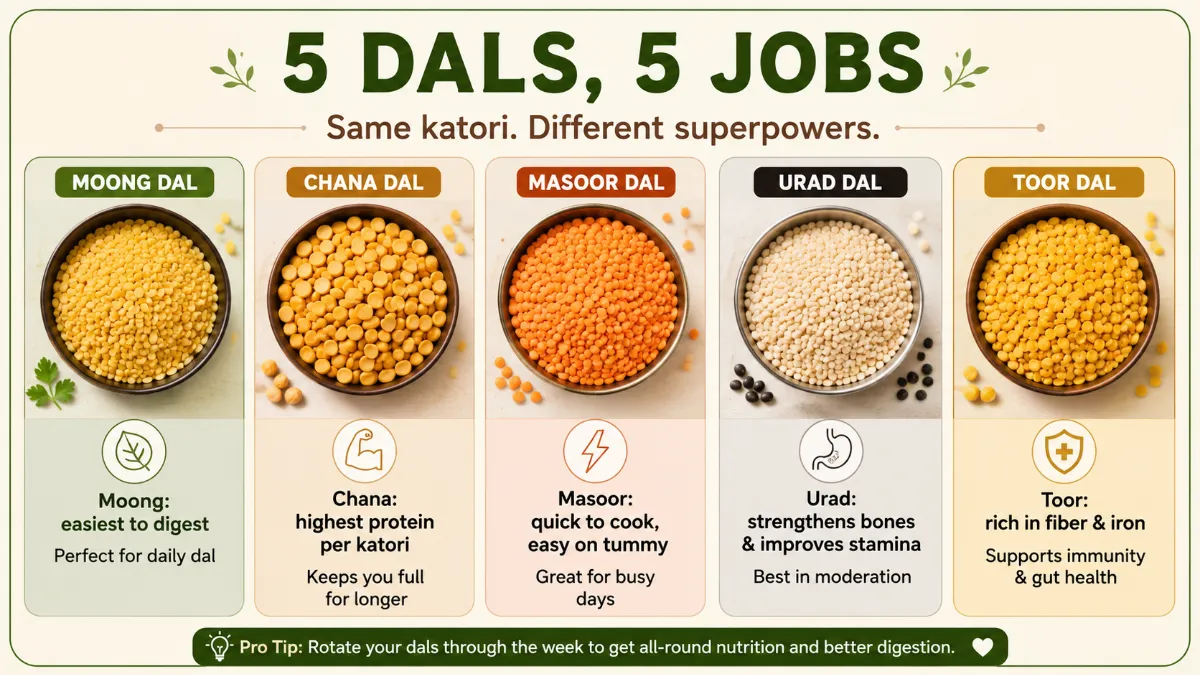
Dal is often the most underrated part of the plate. A randomised controlled trial in Clinical Endocrinology followed 61 women with PCOS, aged 18 to 35, for 16 weeks. One group ate a pulse-based diet built around roughly a cup of split peas, chickpeas or lentils across two daily meals; the other followed a low-fat, low-pulse diet built around lean meat and dairy protein. Both groups exercised and received the same counselling. The pulse-based group showed a greater reduction in insulin response to a glucose tolerance test and a larger drop in diastolic blood pressure than the comparison group.
This is a meaningful finding for anyone building an Indian PCOS diet plan, because it means the dal already on the plate is not a placeholder for protein until something "better" comes along. It is functioning as a low-GI, high-fibre protein source in its own right.
Where dal-roti-sabzi thalis can fall short isn't the presence of dal, it's the quantity relative to the roti or rice next to it. A small katori of dal next to two or three rotis leans carbohydrate-heavy. Increasing the dal portion, or adding a second pulse-based item like sprouts, chana or a moong dal chilla at another meal, shifts that balance without introducing a single new ingredient.
Which Sabzis Actually Help With PCOS Symptoms?
Vegetables do more than add fibre. Leafy greens like palak and methi bring folate and magnesium, and gourds like lauki and tinda are low in calories relative to their volume, which matters for anyone managing weight alongside PCOS. Cruciferous vegetables such as cabbage, cauliflower and broccoli are commonly recommended in PCOS nutrition guidance for their fibre content and glucosinolate compounds, though the strongest evidence for glucosinolates and hormone metabolism still comes from broader population studies rather than PCOS-specific trials.
Bitter vegetables get a lot of attention in Indian PCOS content, particularly karela. The clearest, best-supported evidence for bitter gourd relates to fasting blood glucose in people with type 2 diabetes, not PCOS specifically, so it's more accurate to describe it as plausible and worth including as part of a varied sabzi rotation than to promise it will change PCOS symptoms on its own.
The more consistent factor across the research isn't any single miracle vegetable. It's variety and volume. A sabzi rotation that moves between leafy greens, gourds, and cruciferous vegetables across the week covers more nutritional ground than repeating the same two or three vegetables.
Cooking method matters too, in a way that's easy to overlook. A sabzi that's deep-fried or drowned in oil behaves differently in the body than the same vegetable sauteed lightly with mustard seeds and a tempering of spices. Neither requires a special ingredient. It's a matter of technique already familiar in most Indian kitchens, just applied a little more consistently.
How Should the Plate Be Proportioned?
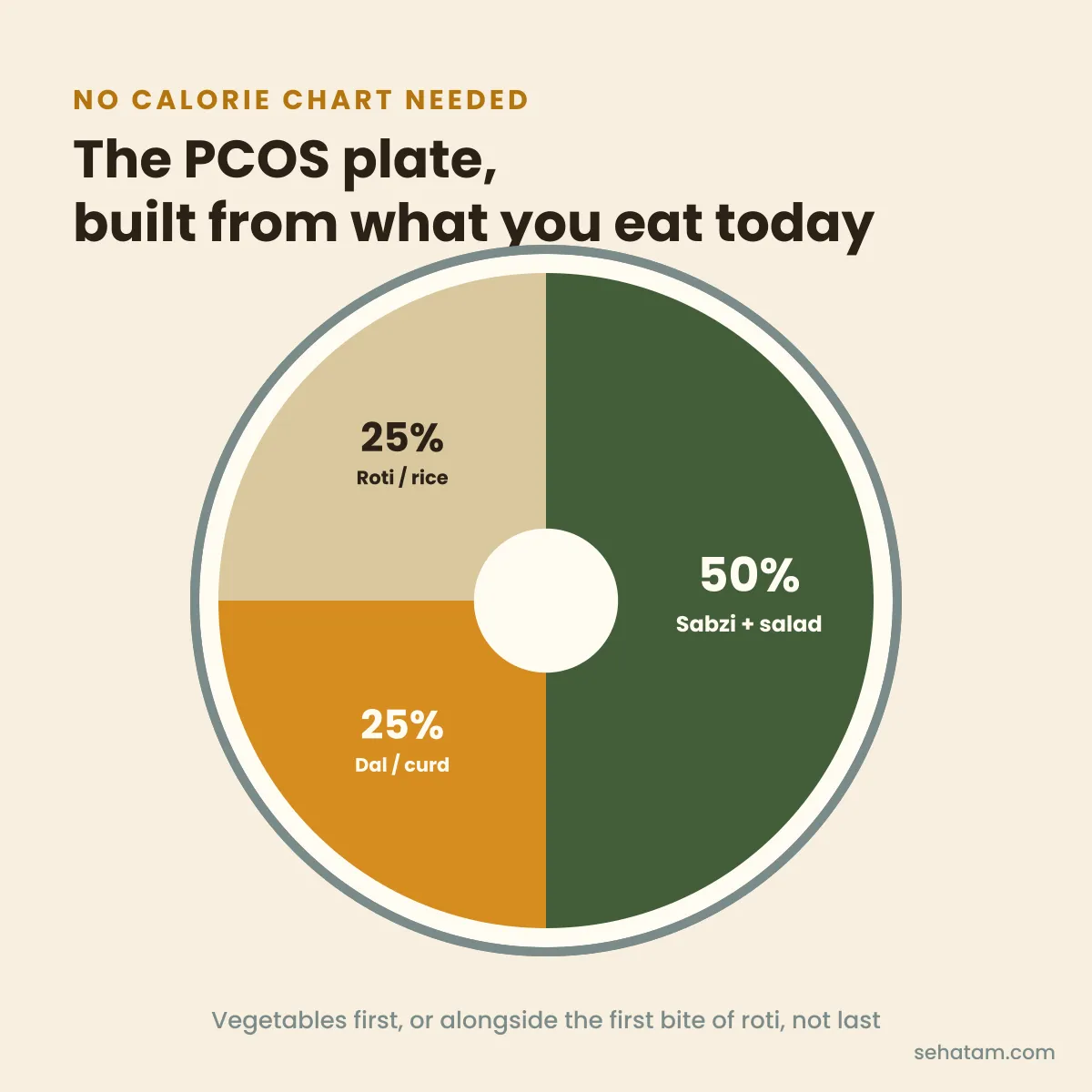
There's no need for a calorie chart to make a dal-roti-sabzi thali more PCOS-aware. The proportion of the plate matters more than counting anything.
• Vegetables and salad take up the largest visual share of the plate, roughly half.
• Dal, curd, paneer or another protein source fills about a quarter.
• Roti or rice fills the remaining quarter.
• Vegetables or salad are eaten first, or at least alongside the first bites of roti, rather than last.
Eating fibre-dense food before or alongside carbohydrate-dense food is a pattern, not a protocol, and it doesn't require restricting quantities or skipping meals. It simply changes the order and the ratio on a plate that would otherwise already be balanced.
Does Curd or Buttermilk Do Anything for PCOS Beyond Digestion?
There's a growing body of research on the gut microbiome's role in PCOS. A 2025 review in the Journal of Translational Medicine described how short-chain fatty acids produced by gut bacteria are associated with better insulin sensitivity and reduced inflammation, and noted that gut bacterial diversity tends to differ between women with PCOS and those without. This is an active, evolving research area rather than a settled one, and most of the mechanistic work so far is in animal models or small human cohorts.
Fermented foods like curd and buttermilk are a reasonable, low-cost way to include live cultures in a daily Indian diet, and they're already part of most dal-roti-sabzi meals. The evidence doesn't yet support specific probiotic strains or doses for PCOS outside a clinical setting, so the honest version of this advice is: keep curd and buttermilk in the rotation because they're a normal part of a varied diet, not because a specific quantity will reverse a symptom.
What About Methi, Haldi and Other Masala Dabba Staples?
Fenugreek (methi) has been studied fairly extensively in PCOS research. A randomised, double-blind trial published in PubMed Central gave fenugreek seed extract alongside metformin to one group of women with PCOS and metformin with a placebo to another, over eight weeks. The fenugreek group showed a significant improvement in ultrasound appearance of the ovaries compared to the placebo group, though insulin resistance markers didn't differ significantly between the two groups in that trial. A separate randomised trial comparing fenugreek directly against metformin found metformin produced significantly larger reductions in fasting blood sugar and insulin resistance than fenugreek did.
That's an important nuance competitors often skip: methi shows some promise, but it is not a substitute for medication in the studies that have tested it head-to-head. Used the way it's traditionally used in Indian cooking, in dal tadkas, sabzis and parathas, methi remains a reasonable addition to a varied diet. Concentrated extracts and supplement doses are a different matter, and any decision to use those should go through a doctor rather than a food blog.
Haldi (turmeric) is one of the most frequently cited spices in PCOS content for its curcumin content, which has anti-inflammatory properties studied across multiple conditions. Most of the strongest curcumin trials use standardised, concentrated extracts rather than the small amounts used in home cooking, so it's fair to describe turmeric as a reasonable everyday spice with a good general nutritional profile, without overstating what a pinch of haldi in a sabzi is likely to do on its own.
Do You Really Have to Give Up Rice and Roti With PCOS?
No, and this is one of the most common misconceptions circulating in Indian PCOS content. Neither rice nor roti needs to disappear from the plate. What changes is portion relative to the rest of the meal, and how often refined versions like white rice or maida-based roti show up compared to less processed alternatives like brown rice or whole wheat and millet flours.
A small katori of rice at a meal, eaten alongside dal, sabzi and salad, digests differently than the same rice eaten alone or in a large quantity, because the fibre and protein around it slow the overall glucose response. Cutting out rice and roti entirely tends to be unsustainable in an Indian household over the long run, and unsustainable changes rarely outperform smaller, permanent ones.
What a Full Day of Dal-Roti-Sabzi Actually Looks Like
None of the meals below require an ingredient outside a standard Indian kitchen. The pattern is what changes: more dal and sabzi relative to grain, a millet rotation a few times a week, and fermented dairy included as usual.
Meal | What's on the plate |
|---|---|
Early morning | Warm water, or methi seeds soaked overnight in water |
Breakfast | Moong dal chilla or vegetable poha, with a bowl of curd |
Mid-morning | A seasonal fruit, such as guava, apple or papaya, eaten whole rather than juiced |
Lunch | One bajra or jowar roti, a katori of dal, a leafy or gourd sabzi, salad, and curd |
Evening | Roasted chana or a handful of nuts, with tea |
Dinner | Vegetable khichdi or one multigrain roti with a lighter dal and sautéed vegetables |
Before bed | Warm milk with a pinch of haldi, or plain warm water |
This isn't a rigid meal chart to follow line by line. It's an illustration of how ordinary Indian meals, made with what's already in most kitchens, line up with what current research associates with better insulin sensitivity in PCOS.
What This Kind of Diet Change Won't Do
Diet is one part of PCOS management, not the whole picture, and it's worth being direct about its limits. Food choices are associated with improvements in insulin sensitivity and metabolic markers in the research above; they are not a guaranteed fix for irregular periods, acne or hair loss, and results vary widely between individuals.
• PCOS is diagnosed through a combination of symptoms, blood tests and ultrasound findings, not through a diet or symptom checklist. A gynaecologist or endocrinologist is the right person to confirm a diagnosis.
• Some women are also prescribed medication, such as metformin or hormonal treatments, alongside lifestyle changes. That decision belongs with a doctor, and no food change should be used to start, stop or adjust any medication without one.
• Weight loss in the range of 5 to 10% is associated with metabolic and reproductive health improvements according to the 2023 international PCOS guideline published in the Journal of Clinical Endocrinology and Metabolism, but this is a population-level finding, not a guarantee for any one individual.
A dal-roti-sabzi-based approach is a reasonable, evidence-aligned starting point precisely because it doesn't ask anyone to abandon familiar food. What it can't do is replace a proper diagnosis or a doctor's involvement in more complex cases.
It's also worth naming what this article deliberately leaves out. It doesn't cover fertility treatment, because that's a medical process that needs a specialist, not a meal plan. It doesn't prescribe calorie counts or specific supplement doses, because those decisions depend on individual blood work that a diet article has no way of seeing. What it offers instead is a clearer picture of why the food already on most Indian plates is a reasonable place to start, and where the research is strong enough to say so with confidence. For the parts that fall outside a single article, cycle tracking, symptom patterns over time, and how food choices fit alongside medical care - Sehatam's PCOS wellness program goes into more depth than one post can

Frequently Asked Questions
Do I need to stop eating rice and roti if I have PCOS?
No. Both can stay on the plate. What matters more is portion relative to dal and sabzi, and choosing less-refined versions like brown rice or whole wheat and millet atta over white rice and maida most of the time.
Is dal-roti-sabzi enough protein for someone with PCOS?
Dal is a genuine source of plant protein and was the intervention food in the Clinical Endocrinology pulse-based diet trial referenced above. A plate with a generous katori of dal, plus curd or paneer at another meal, covers protein reasonably well for most people. Anyone with specific concerns about their intake is better served asking a dietitian to review their actual meals than guessing from a generic gram target.
Which atta is best for PCOS: wheat, multigrain, or millet?
There isn't one best atta for everyone. Rotating between whole wheat, bajra and jowar through the week, rather than relying on a single flour every day, is the pattern most consistent with the available research on glycemic response.
How much weight loss is needed to see PCOS symptoms improve?
The 2023 international PCOS guideline associates a weight loss of around 5 to 10% of body weight with improvements in metabolic and reproductive health markers in women with PCOS and a higher body weight. This is drawn from population-level data, and individual results vary.
Can PCOS be managed with diet alone, without medication?
For some women, especially with milder insulin resistance, lifestyle changes alone lead to meaningful improvement. For others, diet works alongside medication rather than replacing it. Whether medication is needed is a decision for a gynaecologist or endocrinologist based on individual test results, not something a diet plan can determine.

Written By
Vishal Dhenwal
BSc Medical Lab Technologist with 6+ years of clinical diagnostic experience. Founder of Sehatam, translating lab-level clinical knowledge into free wellness guidance for Indians.
Read more about the author →Medical Disclaimer
This article is for informational purposes only and is not medical advice. Nothing here should be used to start, stop, or change any medication or treatment — always consult a qualified doctor first. Read our full disclaimer here.
Related Articles