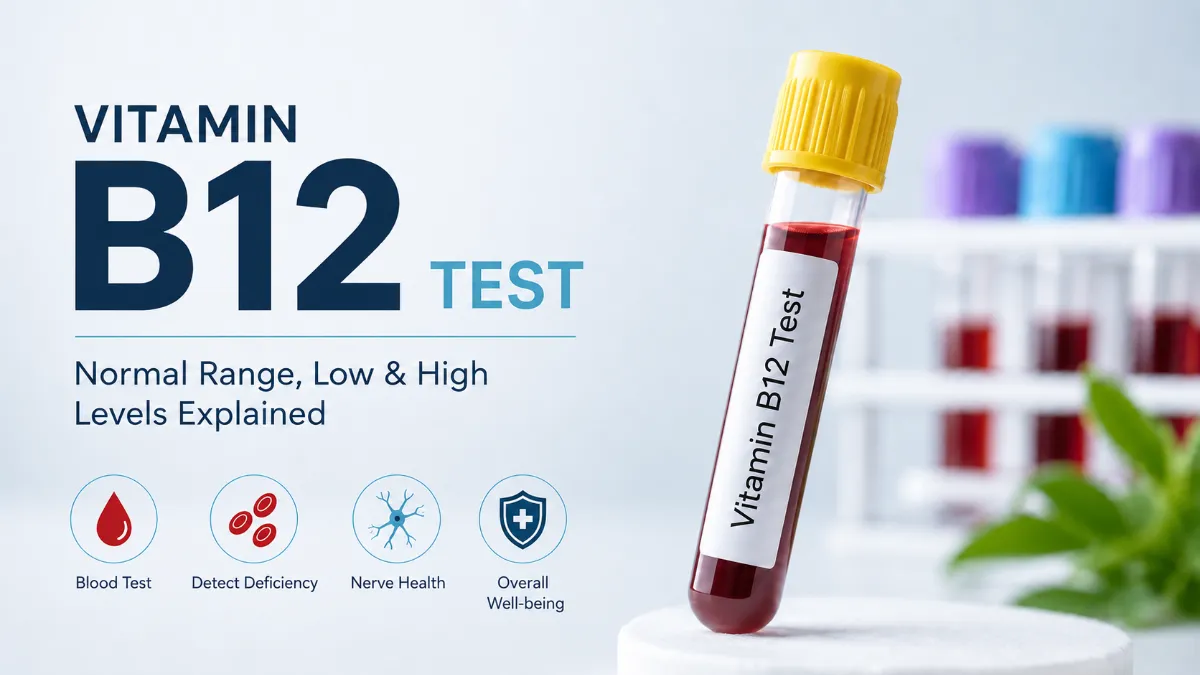
What is a Vitamin B12 Test?
A Vitamin B12 test measures the amount of cobalamin circulating in your blood serum. This vitamin supports red blood cell formation, DNA synthesis and healthy nerve function. Because B12 occurs almost only in animal-derived foods, this is one of the most frequently ordered vitamin tests in India, particularly for people eating vegetarian or vegan diets.
Why is this test done?
• To investigate unexplained fatigue, weakness or pale skin that could point to anemia
• To check for nerve-related symptoms such as tingling, numbness or balance problems
• To confirm or rule out B12 deficiency when a complete blood count shows unusually large red blood cells
• As a screening check for vegetarians, vegans, older adults and people on long-term acid-reducing medication or metformin
• To monitor B12 status after a diagnosis of pernicious anemia or gastrointestinal surgery
Who should get this test?
• You follow a vegetarian, vegan or largely plant-based diet without regular B12 supplementation
• You have persistent fatigue, breathlessness or a fast heartbeat that hasn't improved with rest
• You notice tingling, numbness or a pins-and-needles feeling in your hands or feet
• You have a digestive condition such as celiac disease, Crohn's disease or atrophic gastritis, or you've had stomach or intestinal surgery
• You are pregnant, breastfeeding or over 60, when B12 absorption and demand both change
Talk to your doctor about whether this test makes sense for you rather than interpreting these on your own.
How is the test done?
This test needs a standard blood draw from a vein in your arm, usually taking just a few minutes at a lab or clinic. Fasting practice varies by lab: some ask for 6 to 8 hours without food beforehand, while others don't require it at all. Confirm with your lab or doctor ahead of time, and mention any B12 supplements or injections you're taking, since these can affect the result. Reports are typically ready within a day or two.
Normal Range
Parameter | Normal Range | Unit |
|---|---|---|
Vitamin B12 (Serum) | 200 – 900 | pg/mL |
Vitamin B12 (Serum, SI unit) | approx. 148 – 664 | pmol/L |
Borderline / low-normal zone | 200 – 300 | pg/mL |
Reference ranges can vary slightly between labs depending on their equipment and method. Always check the range printed on your own report.
Different authoritative sources describe this range somewhat differently. Some commonly cite 200 to 900 pg/mL as normal, while others use a wider window of roughly 160 to 950 pg/mL, or higher. A result in the 200 to 300 pg/mL zone is often flagged as borderline, since total serum B12 alone doesn't always reflect what's happening inside your cells. In that case, your doctor may order follow-up markers such as methylmalonic acid or homocysteine for a clearer picture.
What does a High result mean?
A B12 level above the normal range is far less common than a low one and, on its own, usually isn't a cause for concern. Because B12 is water-soluble, your body clears excess amounts through urine, and the most frequent explanation for a high reading is recent supplementation or a B12 injection. When there's no supplement history behind a high result, it can be associated with liver conditions, kidney function changes or certain blood disorders. Your doctor is best placed to decide whether a high result needs further follow-up, based on your full health picture.
What does a Low result mean?
A low B12 result is associated with reduced dietary intake, poor absorption, or increased demand for the vitamin. In India, this is especially common among people on vegetarian or vegan diets, since plant foods don't naturally contain B12. Other contributors can include long-term use of acid-reducing medication or metformin, autoimmune conditions such as pernicious anemia, or digestive disorders that limit absorption. If any medication is a suspected factor, don't stop or change it on your own; discuss it with your doctor first.
Low B12 is linked with megaloblastic anemia and, over time, with nerve-related symptoms such as tingling or balance changes. If your result comes back low, your doctor will weigh your symptoms, diet and other blood values before recommending next steps.
Factors that can affect results
• Recent B12 supplements, multivitamins or injections, even from a few days earlier
• Certain medications, including some antibiotics, anti-seizure drugs and acid-reducing medicines
• Pregnancy, which naturally shifts B12 and folate levels
• A recent blood transfusion
• Differences in testing method and equipment between labs
A single unusual result doesn't automatically mean something is wrong. Your doctor will usually look at the pattern, not one number in isolation.
How to Keep It in the Normal Range
For most people, keeping B12 in a healthy range comes down to consistent dietary intake. If you regularly eat eggs, dairy, fish or meat, your diet likely supplies enough B12 on its own.
The ICMR-NIN's Recommended Dietary Allowances for Indians set a general adult B12 requirement of around 2.2 micrograms a day, a target most non-vegetarians reach without effort. If you follow a vegetarian or vegan pattern, building in fortified foods or a B12-containing supplement, chosen with your doctor's guidance, helps close the gap that a plant-based diet leaves.
Periodic testing, especially if you're vegetarian, pregnant, older, or on long-term medication that affects absorption, helps catch a slow decline early. Managing chronic digestive conditions with your doctor's guidance and avoiding unsupervised long-term use of acid-reducing medication also support steady absorption over time.
Questions You May Be Wondering
Do I need to fast before a Vitamin B12 test?
Practice varies by lab. Some ask for 6 to 8 hours of fasting, while others allow the test at any time of day. Check with your lab or doctor beforehand, and mention any B12 supplements you're taking either way.
Why is B12 deficiency so common among vegetarians in India?
Vitamin B12 occurs naturally only in animal-derived foods. Since a large share of the Indian population eats vegetarian or largely plant-based diets, and fortified foods aren't yet routine, deficiency shows up more often here than in populations with higher meat and dairy intake.
What's the difference between a B12 test and a folate test?
Both vitamins are needed for healthy red blood cells, and low levels of either can cause similar symptoms and blood-count changes. Doctors often order the two together, since a deficiency in one can mask or mimic the other.
Can B12 supplements affect my test result?
Yes. Recent supplementation or an injection can raise your reading for some time afterward, so let your doctor know about any B12 products you've taken recently.
My B12 came back borderline. Should I be worried?
A borderline result usually isn't an emergency. Doctors often use it as a signal for a follow-up test, such as methylmalonic acid or homocysteine, to get a clearer picture rather than relying on the number alone.

Written By
Vishal Dhenwal
BSc Medical Lab Technologist with 6+ years of clinical diagnostic experience. Founder of Sehatam, translating lab-level clinical knowledge into free wellness guidance for Indians.
Read more about the author →Medical Disclaimer
This article is for informational purposes only and is not medical advice. Test ranges can vary by lab — always interpret your results with a qualified doctor. Read our full disclaimer here.
Related Tests