Quick Answer
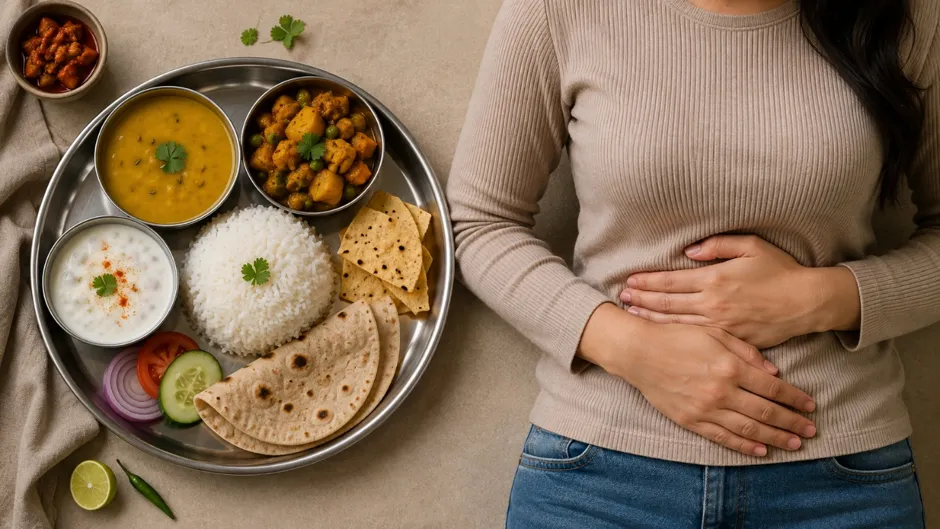
Bloating after nearly every meal usually comes down to a mix of factors common in Indian diets: legumes and vegetables high in fermentable carbohydrates, widespread lactose intolerance, fast eating and large thali portions, and, for a meaningful share of people, an underlying gut condition such as IBS. Occasional bloating after a heavy meal is ordinary digestion at work. Bloating after almost everything you eat, especially alongside pain, altered bowel habits, or discomfort that doesn't settle within a couple of hours, is a pattern worth investigating rather than living with.
What's Actually Happening Inside Your Gut When You Bloat
Bloating is the feeling of tightness, pressure, or fullness in the abdomen. It's different from distension, which is when the belly visibly expands outward. Researchers who study functional abdominal bloating describe its cause as multifactorial: increased gas production, poor gas clearance, excess fluid in the gut, bacterial overgrowth, and changes in pelvic floor or abdominal muscle behaviour can all play a part, often together rather than as one single trigger.
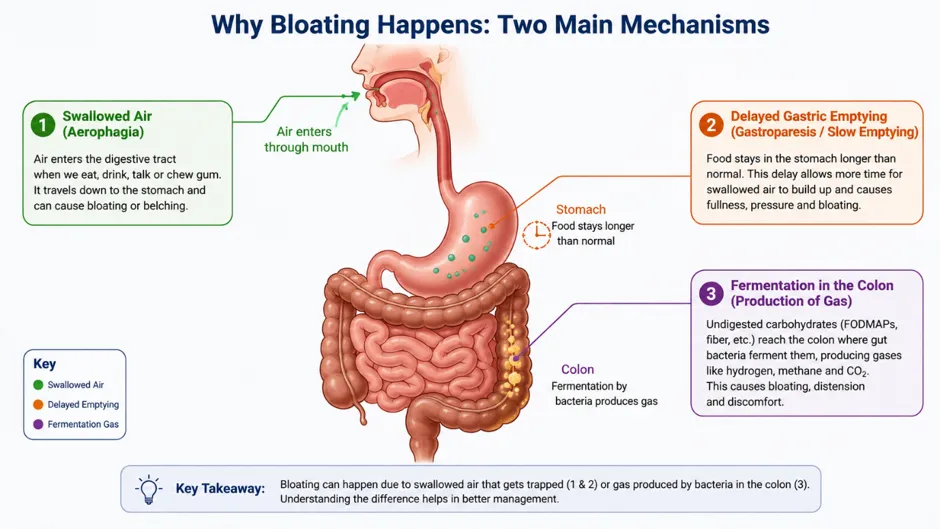
Two mechanisms explain most everyday, food-linked bloating: gas and stretch.
Gas builds up in two ways. One is swallowed air, from talking while eating, drinking through a straw, or eating too quickly. The other is gas produced when gut bacteria in the colon ferment carbohydrates the small intestine could not fully absorb. Legumes are a classic example. Rajma, chole, and other dals contain oligosaccharides that the small intestine cannot break down, because the human gut naturally lacks the enzyme needed to digest them. These carbohydrates pass through largely intact until bacteria in the colon ferment them into hydrogen, carbon dioxide, and sometimes methane, as demonstrated in NIH-published research on legume oligosaccharide fermentation.
Stretch is a separate mechanism. High-fat foods, ghee-heavy parathas, fried snacks, and rich curries, slow gastric emptying, so food sits in the stomach and small intestine longer. That prolonged fullness itself feels like bloating, even without much extra gas involved.
Is It Normal to Feel Bloated After Every Meal?
Some bloating after a big or rich meal is ordinary. It becomes a different question when it shows up after nearly everything you eat, including small or plain meals.
A large US survey of close to 89,000 adults, published in Clinical Gastroenterology and Hepatology, found that nearly one in seven people had experienced bloating in the past week, and the researchers noted that a large share of people manage it on their own instead of raising it with a doctor, see the full study here. Population-level data on bloating specifically is more limited for India, but the functional gut disorders that commonly include bloating as a core symptom, discussed further below, are well documented in Indian research.
The line between normal and worth checking is less about how uncomfortable one episode feels, and more about pattern and company.
Occasional, everyday bloating | Bloating that needs a closer look |
|---|---|
After a heavy, rich, or unusually large meal | After most meals, including small or plain ones |
Eases within a couple of hours | Lasts most of the day or into the next meal |
No pain, or only mild discomfort | Cramping or sharp pain alongside the bloating |
Bowel habits stay normal | New constipation, diarrhea, or alternating between the two |
No weight change | Unintended weight loss |
Happens a few times a month | Happens most days, for weeks at a stretch |
If bloating shows up alongside blood in the stool, persistent vomiting, or unintended weight loss, that combination calls for medical evaluation rather than dietary trial and error, at any age.
The Indian Diet Factor: Foods That Are Common Bloating Triggers
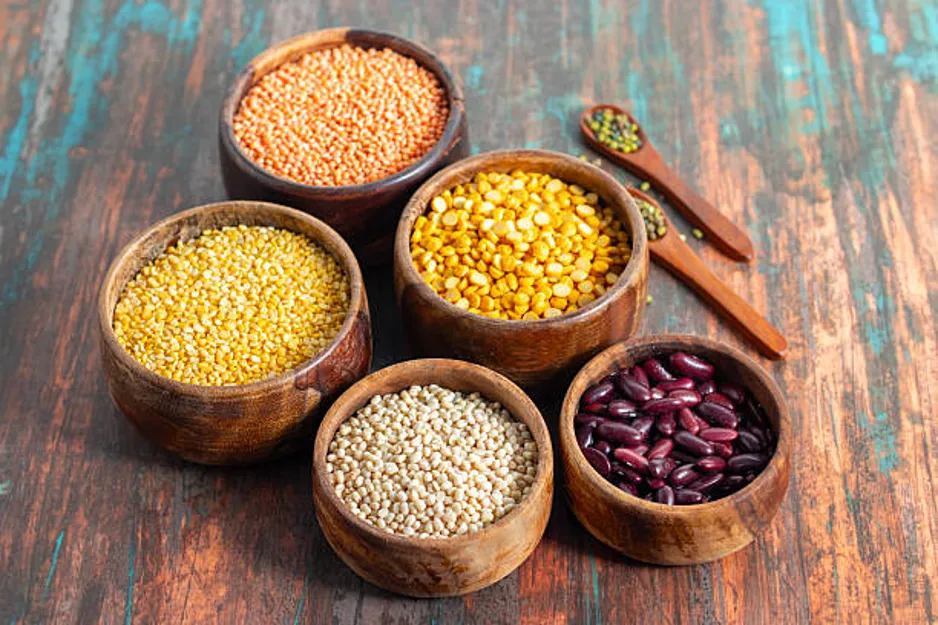
Indian meals lean heavily on food groups that happen to be naturally high in FODMAPs, fermentable carbohydrates that many people's small intestines don't fully absorb. That isn't a flaw in the cuisine. Dal, rajma, and chole are excellent sources of protein and fibre. It simply means the same dishes that make Indian food nutritious are, mechanically, also some of the more gas-producing foods on the plate.
Food group | Common examples | Why it can cause bloating |
|---|---|---|
Legumes | Rajma, chole, whole dals, urad, chana | High in oligosaccharides that ferment in the colon |
Cruciferous vegetables | Cabbage, cauliflower, broccoli | Contain raffinose, a fermentable sugar |
Alliums | Onion, garlic | High in fructans, a FODMAP subtype |
Dairy | Milk, paneer, lassi, khoya-based sweets | Lactose that many Indians cannot fully digest |
Refined, fried carbohydrates | Samosas, kachori, pakora, maida snacks | Slow gastric emptying, low fibre to move things along |
Carbonated drinks | Soda, sparkling water with meals | Directly adds gas to the stomach |
None of this means cutting these foods out permanently. A dietitian-guided low-FODMAP approach, discussed later in this article, works by testing and reintroducing rather than eliminating everything at once, precisely because dal, onion, and garlic are foundational to most Indian cooking and carry genuine nutritional value.
Lactose Intolerance: More Common in India Than Most People Realize
If dairy-heavy meals, think paneer curries, kheer, or a large glass of milk, are reliably followed by bloating, gas, or loose stools within a couple of hours, lactose intolerance is worth considering. It happens when the small intestine doesn't produce enough of the enzyme lactase to break down the milk sugar lactose, which then moves to the colon and ferments.
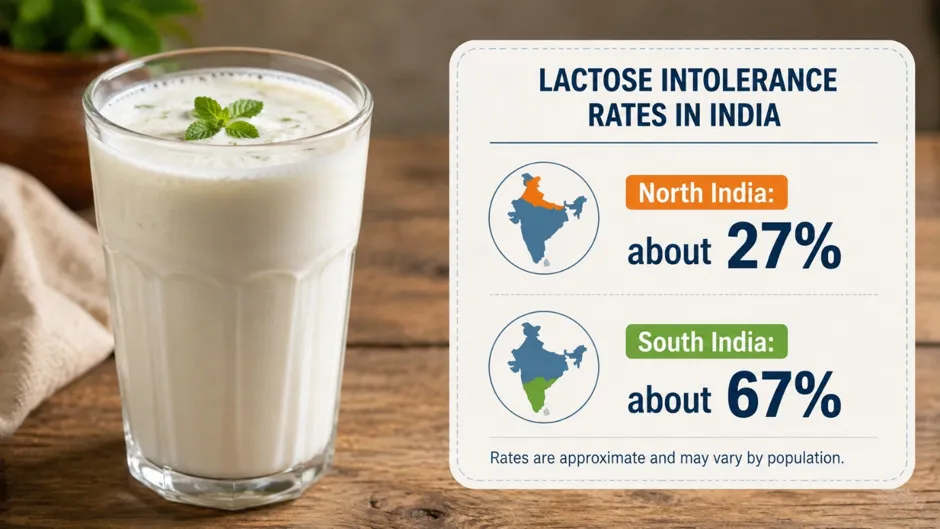
One of the earliest and still most cited multicentre studies on this topic, conducted in the early 1980s and reported in the American Journal of Clinical Nutrition, tested healthy volunteers across different Indian regions. It found lactose intolerance in about 27% of subjects tested in New Delhi, compared with roughly 67% of subjects tested at two South Indian centres, see the study on PubMed. Regional genetics and centuries of differing dairy-consumption patterns are the leading explanations offered for that gap, and later regional studies have continued to find a similar North-South difference.
Lactose intolerance and IBS also overlap more than people expect. A 2025 study of 100 adults with IBS at a North Indian tertiary hospital, published in Cureus, found that 38 of them also tested positive for lactose malabsorption on a hydrogen breath test, with the diarrhea-predominant subtype of IBS most strongly linked to it.
Region (multicentre study) | Share of subjects with lactose intolerance |
|---|---|
North India (New Delhi) | About 27% |
South India (Trivandrum, Pondicherry) | About 67% |
Self-testing this at home usually looks like removing dairy for a short, defined period and tracking whether bloating eases, then reintroducing it to confirm the link. If symptoms are frequent or severe, involving a doctor or dietitian in that process is worthwhile rather than guessing indefinitely.
IBS and Bloating After Every Meal
Bloating right after eating, on most days, over months, is one of the defining symptoms of irritable bowel syndrome (IBS), a functional gut disorder in which the gut responds to normal digestion with more sensitivity and disruption than it should.
IBS prevalence estimates vary widely across Indian studies, depending on the population studied and the diagnostic criteria used. A large community-based survey of nearly 4,800 adults in rural Haryana, using the Rome III criteria, found an overall IBS prevalence of about 4%, detailed in this Northern India community study. Studies in urban settings have found notably higher numbers. A survey of 210 medical students in Delhi found IBS symptoms in 16.5% of respondents, alongside dyspepsia in 18%, with fatty food intake, smoking, and low physical activity flagged as the strongest associated factors, as reported in this Delhi college study.
The gap between rural and urban figures, and between different age groups and diagnostic tools, is one reason Indian gastroenterologists describe IBS as under-recognized rather than rare.
Stress plays a documented role here too. Research on the gut-brain axis, summarized in Mayo Clinic Proceedings, describes how disorders like IBS commonly involve visceral hypersensitivity, a lower threshold for sensing normal digestive activity as pain or pressure, which stress and the nervous system can amplify.
IBS is diagnosed clinically, based on a pattern of recurring abdominal pain linked to changes in bowel habits over time, along with ruling out other conditions when needed. That diagnosis is made by a doctor after taking a full history and, where indicated, targeted tests. It isn't something to self-assign from a symptom checklist, since bloating alone overlaps with several other conditions tied to broader gut health, including lactose intolerance, celiac disease, and ordinary dietary triggers that have nothing to do with IBS.
Eating Habits That Make Bloating Worse
Food choice is one half of the picture. How a meal is eaten shapes the other half, and in India, several common habits stack the odds toward bloating regardless of what's on the plate.
● Eating quickly, especially the "lunch between meetings" pattern, increases swallowed air and sends larger food particles into the stomach, both of which slow digestion.
● Talking through a meal or eating while scrolling a phone adds to swallowed air and reduces attention to fullness cues, which makes overeating easier.
● Large thali portions eaten in one sitting ask the stomach and small intestine to process more volume than they can comfortably handle at once.
● Sitting immediately after a heavy lunch, common at a desk job, slows gastric emptying compared with light movement.
● Drinking large volumes of liquid with meals is a commonly cited trigger, though the evidence on this specific point is mixed rather than conclusive.
What Research Says Helps
Two approaches have real evidence behind them for reducing bloating, separate from cutting out entire food groups.
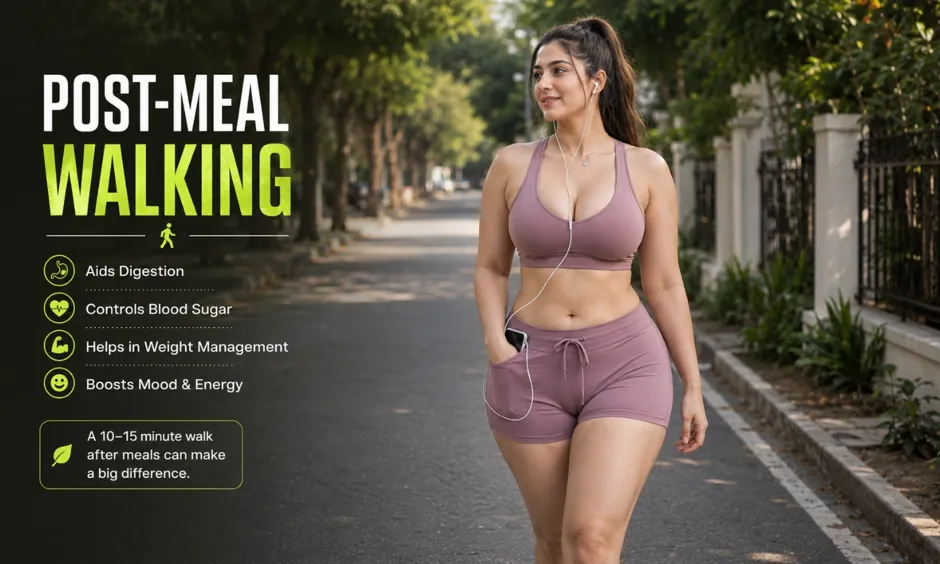
A randomized clinical trial published in Gastroenterology and Hepatology from Bed to Bench compared two groups of adults with functional bloating over four weeks. One group used a prokinetic medication, the other walked for 10 to 15 minutes after each meal. Both groups showed meaningful improvement in bloating and related symptoms, which the researchers took as evidence that short, light movement after eating can be about as effective as medication for this specific symptom, in people without a structural or serious underlying disease. Any medication route, prokinetics included, needs a doctor's prescription and supervision. It isn't something to start independently on the strength of a single study.
The low-FODMAP diet has the strongest research base for diet-driven bloating relief, though it's structured as a three-phase process, elimination, reintroduction, and personalisation, meant to be run with a dietitian rather than followed as a permanent restriction. A 2025 survey of patients who had completed a low-FODMAP protocol, published research on this cohort, found that over 90% of IBS patients reported reduced symptoms overall, with the single largest improvement seen specifically in bloating scores. A separate narrative review of controlled trials across multiple gastrointestinal conditions, summarized here, reached a similar conclusion for bloating and abdominal pain, while flagging that the diet needs supervision because of the risk of nutrient gaps and reduced microbial diversity if the elimination phase runs too long.
Traditional additions such as hing (asafoetida), ajwain, and jeera are widely used in Indian kitchens specifically for digestion. Controlled clinical trials measuring their bloating-specific effect are limited compared with the walking and low-FODMAP evidence above, so they sit in a different, less rigorously tested category rather than being disproven.
Neither of these findings is a personal instruction. What research shows is a pattern at the group level. How it applies to any one person's gut, medications, and health history is a conversation for a doctor or registered dietitian, not something to copy directly from an article.
When to See a Doctor
Bloating on its own, even daily, rarely signals an emergency. Certain combinations are different. Getting medical evaluation is reasonable if bloating comes with persistent or worsening abdominal pain, unintended weight loss, blood in the stool, vomiting, a new change in bowel habits that doesn't resolve, or if bloating starts for the first time after age 40 to 50.
Gastroenterologists typically start with a history and physical exam. Depending on findings, they may use tools such as a hydrogen breath test for lactose intolerance or SIBO, blood tests for celiac markers, or an endoscopy to check for structural causes. Which specific tests are needed, and in what order, is a clinical decision based on individual history, not something a general article can determine.
Frequently Asked Questions
Is it normal to feel bloated after every meal?
Not if "every meal" really means most meals, including small or simple ones. Occasional bloating after a big or rich meal is ordinary digestion. Bloating that shows up after nearly everything you eat points to a more consistent driver, commonly a food intolerance, an eating-habit pattern, or a functional gut condition like IBS, and is worth discussing with a doctor rather than treating as a fixed part of how your body works.
Why is my stomach flat in the morning but bloated by evening?
Overnight, digestion from the previous day's meals largely finishes, so gas and waste volume are at their lowest first thing in the morning. As you eat through the day, gas from fermentation and the physical volume of food both accumulate, which is why bloating commonly builds toward evening, even in people without a diagnosed digestive condition.
Why do I still feel bloated after eating simple home-cooked food like dal and roti?
Home-cooked doesn't automatically mean low bloating-risk. Dal is a legume and carries the same fermentable-carbohydrate profile as rajma or chole, usually just in smaller, more digestible portions. Portion size, how quickly the meal is eaten, and individual differences in gut bacteria and enzyme levels can all mean plain, healthy food still triggers bloating for some people.
Can bloating after eating rice or dal be a sign of something serious like gallstones?
Occasionally, though it's far more often explained by ordinary fermentation or eating habits. Gallstone-related bloating is typically tied more closely to fatty foods specifically, and usually comes with pain in the upper right abdomen, not general bloating after any carbohydrate-heavy meal. A doctor can confirm or rule this out with an ultrasound. It isn't something to self-diagnose from bloating alone.
Does walking after meals actually help with bloating?
A randomized trial found that a short walk of 10 to 15 minutes after eating produced improvements in bloating similar to those seen with prokinetic medication, in adults with functional bloating and no other underlying condition. It's one of the better-evidenced, lowest-risk approaches researchers have tested so far, though it isn't a guaranteed fix for everyone, since bloating has multiple possible causes.

Written By
Vishal Dhenwal
BSc Medical Lab Technologist with 6+ years of clinical diagnostic experience. Founder of Sehatam, translating lab-level clinical knowledge into free wellness guidance for Indians.
Read more about the author →Medical Disclaimer
This article is for informational purposes only and is not medical advice. Nothing here should be used to start, stop, or change any medication or treatment — always consult a qualified doctor first. Read our full disclaimer here.
Related Articles
.webp)