
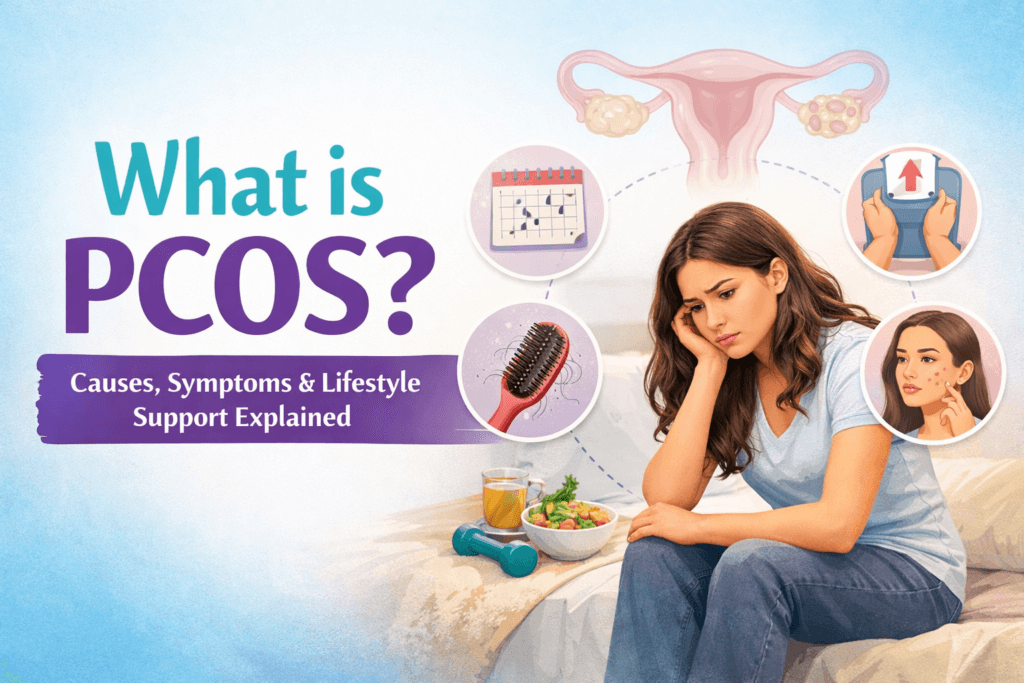
PCOS is one of the most commonly searched health topics among women — yet it remains widely misunderstood. Many women first hear about PCOS only after facing irregular periods, weight gain, or hormonal concerns, which can feel confusing and stressful.
This article explains what PCOS is, its common symptoms and causes, and how lifestyle-based support may help manage overall well-being.
What Is PCOS? (In Simple Words)
PCOS stands for Polycystic Ovary Syndrome. It is a hormonal condition that affects women of reproductive age. PCOS is often linked to hormonal imbalance and changes in how the body responds to insulin.
PCOS may affect:
- Menstrual cycle regularity
- Weight and metabolism
- Skin and hair health
- Energy levels and mood
It’s important to understand that PCOS looks different for every woman. Some may experience noticeable symptoms, while others may have mild or occasional signs.
If you want a complete guide on managing PCOS naturally, visit our PCOS management guide.
Common Symptoms of PCOS
PCOS symptoms can vary, but many women experience one or more of the following:
- Irregular or missed periods
- Difficulty managing weight
- Acne or oily skin
- Hair fall or unwanted facial/body hair
- Low energy levels
- Mood swings or stress
Not every woman with PCOS will have all these symptoms. The presence and intensity of symptoms can differ from person to person.
Managing PCOS becomes easier with the right daily routine. Our PCOS Lifestyle & Diet Plan (PDF) is designed to help women balance hormones naturally.
Possible Causes of PCOS
There is no single known cause of PCOS, but experts believe it may be influenced by a combination of factors:
1. Hormonal Imbalance
PCOS is often associated with higher levels of certain hormones, which may affect ovulation and menstrual cycles.
2. Insulin Resistance
Some women with PCOS may have difficulty using insulin efficiently, which can influence weight and hormone balance.
3. Genetics
PCOS may run in families, suggesting a genetic component.
4. Lifestyle Factors
Diet, physical activity, stress levels, and sleep patterns may also play a role in how PCOS symptoms appear and feel.
Can PCOS Be Managed?
PCOS is considered a long-term condition, but many women are able to support their well-being through consistent lifestyle habits.
There is no single solution that works for everyone. Instead, a balanced approach focusing on daily routines, nutrition, movement, and stress management may help support overall health.
Medical guidance is important, and lifestyle support can work alongside professional advice.
How Lifestyle Choices May Support PCOS
Lifestyle-based support focuses on creating habits that are realistic and sustainable over time.
Some areas that may help include:
- Balanced eating habits that support steady energy levels
- Regular physical activity, such as walking or gentle strength training
- Managing stress through mindfulness or relaxation techniques
- Prioritizing sleep and daily routines
Small, consistent changes are often easier to maintain than extreme or restrictive approaches.
Many women find that structured meal plans and lifestyle guidance reduce PCOS symptoms. You can explore our PCOS digital guide here.
A Gentle, Structured Approach to PCOS Wellness
Many women feel overwhelmed by conflicting information online. A structured, easy-to-follow approach can make lifestyle changes feel more manageable.
If you’re looking for guided support, you can explore our PCOS Lifestyle Support Program, which focuses on:
- Simple diet guidance
- Daily habit suggestions
- Weight management support
- Stress and self-care practices
👉 Explore the PCOS Lifestyle Support Program
When Should You Seek Medical Advice?
If you experience ongoing symptoms such as irregular periods, sudden weight changes, or other concerns, it’s important to consult a qualified healthcare professional.
Lifestyle support is meant to complement, not replace, medical guidance.
Final Thoughts
PCOS can feel challenging, but understanding the condition is the first step toward feeling more in control. With the right information and supportive habits, many women are able to create routines that support their overall well-being.
Every PCOS journey is unique. Focus on progress, not perfection, and choose approaches that feel sustainable for your lifestyle.
Want a Simple PCOS Action Plan?
Download our PCOS Diet & Lifestyle Guide – beginner-friendly, doctor-informed, and easy to follow.
Disclaimer
This article is for educational and informational purposes only. It is not intended to diagnose, treat, cure, or prevent any medical condition. Please consult a healthcare professional for medical advice.