What is a Lipid Profile?
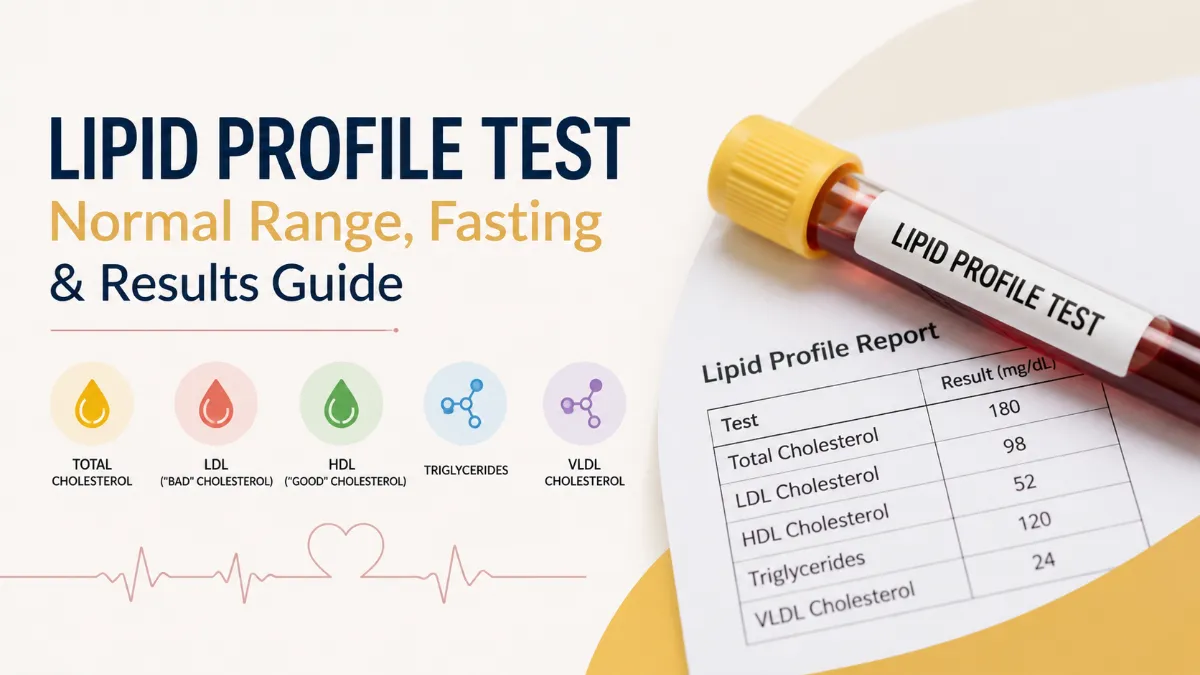
A Lipid Profile, also called a lipid panel or cholesterol test, measures the fats circulating in your blood: total cholesterol, LDL cholesterol, HDL cholesterol, VLDL cholesterol, and triglycerides. These fats are essential raw material for building cells and producing hormones, but too much of the wrong kind, over years, can build up inside the walls of your blood vessels. The test gives your doctor a snapshot of that balance and is one of the most widely used tools for gauging long-term heart and blood vessel health.
Why is this test done?
• To screen for cardiovascular risk as part of a routine health check-up
• To monitor cholesterol levels in people already diagnosed with high cholesterol or dyslipidemia
• To assess risk in people with diabetes, high blood pressure, obesity, or a family history of early heart disease
• To track how diet, exercise, or other lifestyle changes are affecting cholesterol and triglyceride levels over time
• To support a doctor's evaluation before deciding on any cardiovascular treatment plan
Who should get this test?
Talk to your doctor about a Lipid Profile if any of the following apply to you. None of these on their own mean you have a problem; they're simply reasons this test is commonly recommended.
• You're an adult due for a routine annual or periodic health check-up
• You have a family history of high cholesterol or early heart disease
• You live with diabetes, high blood pressure, or a higher body weight
• You smoke or have a largely sedentary daily routine
• Your doctor is monitoring a previous abnormal lipid result or ongoing treatment
How is the test done?
This test needs a small blood sample drawn from a vein in your arm, usually from the inside of the elbow. The draw itself takes only a couple of minutes, though you may be asked to sit for a short observation period afterward.
Labs have traditionally asked for a 9 to 12 hour fast (water is fine) before this test, since a recent meal can temporarily raise triglycerides. Some current clinical guidance now accepts a non-fasting sample for routine screening, so the requirement can vary by lab and by what your doctor is specifically checking. It's best to confirm with your lab or doctor before your appointment rather than assume either way.
Normal Range
Parameter | Normal Range | Unit |
|---|---|---|
Total Cholesterol | Below 200 | mg/dL |
LDL Cholesterol (“bad” cholesterol) | Below 100 | mg/dL |
HDL Cholesterol (“good” cholesterol) – Men | 40 and above | mg/dL |
HDL Cholesterol (“good” cholesterol) – Women | 50 and above | mg/dL |
Triglycerides | Below 150 | mg/dL |
VLDL Cholesterol | Below 30 | mg/dL |
Reference ranges can vary slightly between labs depending on their equipment and method – always check the range printed on your own report.
What does a High result mean?
A high total cholesterol or high LDL cholesterol result is associated with a greater chance of fatty plaque building up inside artery walls over time, a process called atherosclerosis, which is linked to a higher long-term risk of heart attack and stroke.
High triglycerides are often associated with diets heavy in refined carbohydrates, sugar, or alcohol, and can also be seen alongside poorly controlled blood sugar. Very high triglyceride levels are additionally associated with inflammation of the pancreas. A high VLDL result generally moves in step with triglycerides, since VLDL is the particle that carries them through your bloodstream, and is associated with the same artery-related risks.
None of these results confirm a diagnosis on their own. Your doctor looks at the full panel together with your overall health picture, not any single number in isolation.
What does a Low result mean?
Low HDL cholesterol is generally viewed as unfavorable rather than reassuring, since HDL's role is to help clear excess cholesterol from the bloodstream. A lower HDL result is associated with reduced protection against artery plaque buildup, even if your other lipid numbers look fine.
A very low total cholesterol or LDL result is uncommon and is sometimes associated with malnutrition, an overactive thyroid, liver disease, or certain inherited lipid disorders. It's usually picked up incidentally on a routine test rather than through any noticeable symptom. Low triglycerides are rarely a standalone concern and are occasionally associated with a very low-fat diet or a nutrient absorption issue.
Factors that can affect results
• Not fasting when the lab expects a fasting sample, which can noticeably raise triglycerides
• A heavy meal, fried food, or alcohol in the 24 hours before the blood draw
• Recent acute illness, infection, or surgery, which can temporarily lower cholesterol readings
• Certain medications, including some steroids, hormonal contraceptives, and blood pressure medicines, can shift lipid levels; mention anything you're taking to your doctor when discussing your results, and never start, stop, or change a medication based on this article
• Pregnancy, which naturally raises lipid levels
• The specific lab's testing method, which is why the same sample can print slightly different numbers at two different labs
A single abnormal number, especially a borderline one, isn't a reason to panic. It's a reason to repeat the test as advised or discuss it with your doctor.
How to Keep It in the Normal Range
• Favor whole foods, vegetables, fruits, and fiber-rich grains over fried and heavily processed snacks
• Choose healthier cooking fats and go easy on deep-fried and bakery items common in everyday Indian meals
• Stay physically active on most days; brisk walking, cycling, or similar activity all count
• Work toward a healthy body weight and waist circumference over time, not overnight
• Limit alcohol and avoid smoking
• Prioritize consistent sleep and manage stress, both of which influence how your body handles fat and sugar
• Keep up with routine lipid checks so any shift is caught early rather than after it has been building for years
Questions You May Be Wondering
Do I need to fast before a Lipid Profile test?
It depends on the lab and what your doctor wants to assess. A 9 to 12 hour fast has long been standard, but non-fasting samples are increasingly accepted for routine screening. Confirm with your lab or doctor beforehand.
What is a good cholesterol level for someone in India?
The same reference ranges apply, but the pattern of abnormal results tends to differ. The ICMR-INDIAB national study found that dyslipidemia is very common among Indian adults, and that low HDL cholesterol, rather than high LDL alone, is the most frequent driver of it. This is part of why doctors in India often pay close attention to HDL and triglycerides, not just total cholesterol and LDL.
Can a Lipid Profile detect heart disease directly?
No. It's a risk-marker test, not a diagnostic scan of your heart or arteries. Your doctor combines it with other factors such as blood pressure, blood sugar, weight, and family history to judge overall cardiovascular risk.
How often should I get a Lipid Profile done?
For adults with normal results and no major risk factors, roughly every five years is a common interval. If you have diabetes, high blood pressure, a prior abnormal result, or you're on lipid-related treatment, your doctor may recommend checking it more often.
Does stress affect cholesterol test results?
Acute physical or emotional stress can temporarily shift lipid levels, particularly triglycerides. If you've been under unusual stress, it's worth mentioning to your doctor when reviewing your report rather than assuming a single number tells the whole story.

Written By
Vishal Dhenwal
BSc Medical Lab Technologist with 6+ years of clinical diagnostic experience. Founder of Sehatam, translating lab-level clinical knowledge into free wellness guidance for Indians.
Read more about the author →Medical Disclaimer
This article is for informational purposes only and is not medical advice. Test ranges can vary by lab — always interpret your results with a qualified doctor. Read our full disclaimer here.