What is a Liver Function Test?
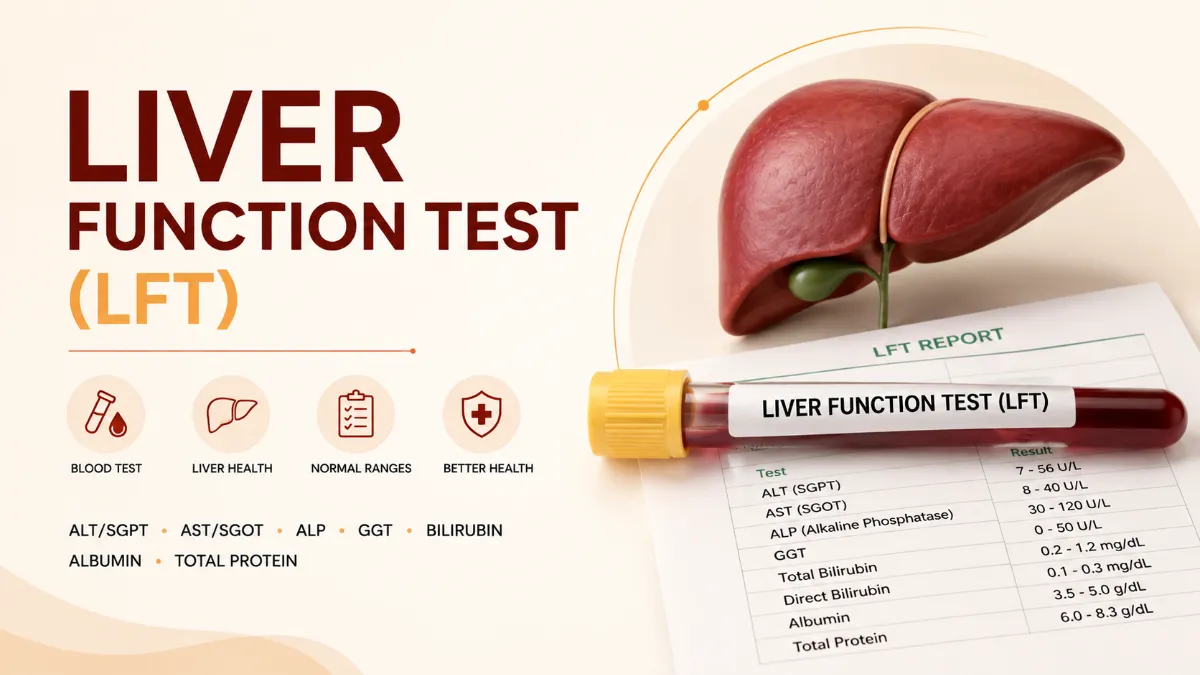
A Liver Function Test, commonly called LFT, is a group of blood tests that check how well your liver is working. It measures liver enzymes and proteins, along with bilirubin, a waste product the liver clears from the blood. Because the liver filters your blood and manufactures proteins the body depends on, a shift in these values often shows up before other symptoms appear. Doctors in India commonly order an LFT as part of routine checkups, before starting certain medications, or when investigating symptoms linked to the liver.
Why is this test done?
● To screen for liver damage during a routine health checkup
● To investigate symptoms such as unexplained fatigue, yellowing of the skin or eyes, abdominal pain, or dark urine
● To monitor existing conditions such as fatty liver disease or viral hepatitis
● To check how alcohol use may be affecting the liver
● To track how the liver is handling certain long-term medications
● As part of pre-surgery, insurance, or pre-employment health screening
Who should get this test?
Talk to your doctor about this test if:
● You have unexplained tiredness that doesn't improve with rest
● You've noticed yellowing of your skin or the whites of your eyes
● You have persistent discomfort or swelling in the upper right side of your abdomen
● You drink alcohol regularly or have a family history of liver disease
● You are overweight or living with diabetes, both linked to a higher risk of fatty liver disease in India
● Your doctor has prescribed a medication that needs regular liver monitoring
How is the test done?
A trained technician draws a small blood sample from a vein in your arm, a process that takes only a few minutes. Most labs ask for 8 to 12 hours of fasting beforehand, since a recent meal, especially a fatty one, can temporarily shift some readings. Fasting requirements differ slightly between labs, so it helps to confirm this when you book the test. Results are usually available within a day.
Normal Range
Parameter | Normal Range | Unit |
|---|---|---|
ALT (SGPT) | 7 to 56 | U/L |
AST (SGOT) | 8 to 40 | U/L |
ALP (Alkaline Phosphatase) | 30 to 120 | U/L |
GGT | 0 to 50 | U/L |
Total Bilirubin | 0.2 to 1.2 | mg/dL |
Direct (Conjugated) Bilirubin | 0.1 to 0.3 | mg/dL |
Albumin | 3.5 to 5.0 | g/dL |
Total Protein | 6.0 to 8.3 | g/dL |
Reference ranges can vary slightly between labs depending on their equipment and method. Always check the range printed on your own report.
ALT and AST tend to run a little higher in men than in women, and cutoffs can shift with age. ALP follows a similar pattern, and it also rises naturally during pregnancy and in growing children, since bone growth contributes to this enzyme too.
What does a High result mean?
Elevated ALT and AST are associated with liver cell injury or inflammation. Common triggers include viral hepatitis and fatty liver disease, though certain medications can also raise these enzymes. When AST rises noticeably higher than ALT, it can point toward alcohol-related liver stress, though this pattern isn't absolute on its own. Raised ALP and GGT together often suggest a slowdown in bile flow, sometimes linked to gallstones or bile duct disease. A rise in bilirubin can produce visible jaundice and is associated with the liver's reduced ability to clear waste, or with a blockage somewhere along the bile duct.
Viral hepatitis remains a significant driver of abnormal liver enzymes globally. The World Health Organization's hepatitis reporting tracks hepatitis B and C as leading causes of chronic liver disease and liver cancer worldwide, which is one reason doctors take a persistent enzyme elevation seriously enough to investigate further. None of these patterns confirm a diagnosis by themselves. Your doctor interprets them alongside your symptoms and medical history, sometimes with imaging added in.
What does a Low result mean?
Low ALT or AST rarely signals a problem on its own, since these enzymes naturally sit near the lower end of the range in many healthy people. Low albumin or total protein is associated with reduced liver protein production, but can equally reflect poor nutrition or a condition that causes the body to lose protein through the kidneys. Low bilirubin is not typically considered a marker of concern.
Factors that can affect results
● Recent alcohol consumption, even in moderate amounts, in the day or two before the test
● Strenuous exercise, which can temporarily raise AST since this enzyme is also present in muscle
● Not following fasting instructions, which particularly affects bilirubin readings
● Certain medications, including some painkillers, antibiotics, cholesterol-lowering drugs, and herbal supplements; mention any regular medication to your doctor before the test
● Pregnancy, which can raise ALP
● Dehydration, which can concentrate protein readings
● Recent muscle injury or intramuscular injections
This is exactly why doctors rarely act on a single abnormal number. A repeat test, taken under proper conditions, often tells a clearer story.
How to Keep It in the Normal Range
Limit alcohol intake or avoid it altogether, since the liver processes alcohol directly and heavy, regular use is one of the most common causes of long-term liver strain. Build meals around whole grains, vegetables, lentils, and lean protein rather than deep-fried or heavily processed food, since a diet high in refined carbohydrates and saturated fat is closely linked to fatty liver disease in the Indian population.
Stay hydrated through the day. Keep a consistent sleep schedule and stay physically active, since regular movement supports a healthy metabolism and weight, both of which influence how much fat builds up in the liver over time. Avoid unnecessary use of over-the-counter painkillers and herbal supplements without your doctor's input, since several of these are processed through the liver. Scheduling routine health checkups also helps, since it means any change in your liver panel gets caught early rather than after symptoms appear.
Questions You May Be Wondering
Do I need to fast before a liver function test?
Most labs recommend 8 to 12 hours of fasting, with water allowed, since a recent meal can temporarily shift some readings. Confirm the exact instructions with your lab when you book the test.
Can stress affect liver function test results?
Stress itself isn't a direct cause of abnormal liver enzymes, but poor sleep and increased alcohol use during stressful periods can indirectly influence results.
How often should I get a liver function test done?
There's no universal schedule. It depends on your risk factors and whether you're monitoring an existing condition or medication. Your doctor can recommend a frequency suited to your situation.
Can a liver function test detect fatty liver disease?
LFT results alone can't confirm fatty liver disease, since enzyme levels are sometimes normal even when fat has built up in the liver. Doctors typically combine LFT results with an ultrasound or other imaging to assess this.
Is a slightly high SGPT or SGOT level serious?
A mild, one-time elevation is common and often linked to everyday factors like recent alcohol intake, exercise, a missed fasting instruction, or even a rough week of sleep. It becomes worth discussing with your doctor if the level stays high on repeat testing or comes with symptoms.

Written By
Vishal Dhenwal
BSc Medical Lab Technologist with 6+ years of clinical diagnostic experience. Founder of Sehatam, translating lab-level clinical knowledge into free wellness guidance for Indians.
Read more about the author →Medical Disclaimer
This article is for informational purposes only and is not medical advice. Test ranges can vary by lab — always interpret your results with a qualified doctor. Read our full disclaimer here.