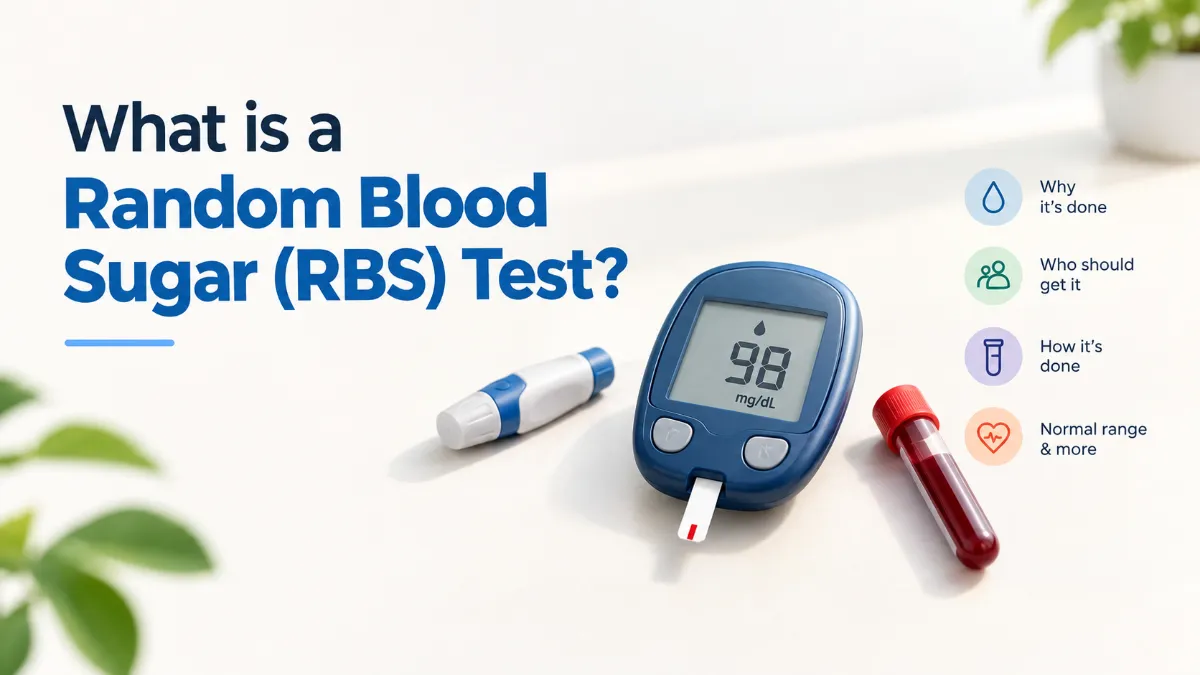
What is a Random Blood Sugar (RBS) Test?
A Random Blood Sugar test measures the amount of glucose circulating in your blood at any time of day, regardless of when you last ate. Glucose is the body's primary fuel, so keeping it in a working range affects the brain and virtually every organ system. Unlike a fasting test, RBS does not require any special preparation, which makes it useful for a quick check during routine visits, emergency situations, or ongoing diabetes care. In India, it is one of the most commonly ordered blood tests, often included in general health checkups alongside other biochemistry panels.
Why is this test done?
• To screen for diabetes or prediabetes, particularly in adults above 30 years or those with known risk factors
• To get a quick reading when someone shows symptoms associated with high blood sugar
• To monitor glucose control in a person already diagnosed with diabetes
• To check glucose levels in patients who are unwell, unconscious, or unable to confirm fasting status
• As part of a general health checkup, since it needs no special preparation
Who should get this test?
Talk to your doctor about an RBS test if you notice unusual thirst, frequent urination, unexplained tiredness, or wounds that take longer than usual to heal. ICMR guidelines recommend diabetes screening for all adults above 30 years, and at an earlier age for those with a family history of diabetes, higher body weight or waist circumference, high blood pressure, elevated cholesterol, a sedentary routine, a history of gestational diabetes, or polycystic ovarian syndrome. Pregnant women are often screened for diabetes as part of routine antenatal care. If any of this applies to you, it is worth bringing up at your next visit rather than waiting for symptoms to appear.
How is the test done?
An RBS test uses a blood sample, usually drawn from a vein in the arm, though a finger-prick sample with a glucometer is common for quick checks. No fasting is needed, and the sample can be collected at any time of day, regardless of your last meal. The draw itself takes only a few minutes, and lab results are typically available within a few hours to a day.
RBS Normal Range
Random Blood Sugar (RBS) Result | What It May Mean | Unit |
|---|---|---|
Below 140 mg/dL | Generally considered within the normal range | mg/dL |
140–199 mg/dL | Further testing is recommended; this result alone does not diagnose diabetes | mg/dL |
200 mg/dL or above + symptoms of diabetes | Meets the criterion for diabetes diagnosis | mg/dL |
Important: According to Indian Council of Medical Research (ICMR) guidance, a random plasma glucose level of 200 mg/dL or above along with symptoms of diabetes is a diagnostic criterion for diabetes. People with a random plasma glucose result of 140–199 mg/dL are recommended to undergo further testing, such as an oral glucose tolerance test (OGTT).
Reference ranges can vary slightly between laboratories. Always check the reference range and interpretation provided with your own report. Most Indian laboratories report blood glucose in mg/dL, while some reports may use mmol/L.
What does a High result mean?
A random blood sugar reading of 200 mg/dL or higher together with symptoms of diabetes, such as excessive thirst, frequent urination, unexplained weight loss, or persistent fatigue, meets the diagnostic criterion for diabetes in ICMR guidance. A random blood sugar result of 140–199 mg/dL does not by itself diagnose diabetes and may require further testing, such as fasting blood glucose, an oral glucose tolerance test (OGTT), or HbA1c. According to ICMR's diagnostic criteria, this finding is usually confirmed with a repeat test, a fasting glucose test, an oral glucose tolerance test, or an HbA1c test before a formal diagnosis is made. A reading between 140 and 199 mg/dL does not confirm diabetes on its own, but it is commonly followed up with further testing.
High readings are not always about diabetes. Illness, infection, recent surgery, emotional stress, and certain medications such as corticosteroids can all push blood sugar up temporarily. In pregnant women, an elevated reading may prompt screening for gestational diabetes. If your RBS comes back high, your doctor is the right person to interpret what it means for you and what testing should follow. Consult your doctor before making any changes to medication based on a single reading.
What does a Low result mean?
A random blood sugar reading below 70 mg/dL is generally considered low, though some healthy, thin, or young individuals can run slightly lower without any underlying problem. Low readings are associated with hypoglycemia, which can occur after skipping meals, prolonged fasting, intense physical activity, or excess alcohol intake.
In people being treated for diabetes, low readings are often linked to insulin or other glucose-lowering medications, particularly when a dose was taken without a matching meal. Less commonly, persistent low readings can point to liver conditions or hormonal imbalances that affect glucose regulation. If you experience shakiness, sweating, confusion, or a rapid heartbeat along with a low reading, treat it as urgent and speak with your doctor. Never adjust or stop a diabetes medication on your own. Discuss any dose changes with your doctor first.
Factors that can affect results
• What and how much you ate before the test, and how long ago
• Physical activity or exercise in the hours before the blood draw
• Stress, anxiety, or an acute illness at the time of testing
• Certain medications, including steroids and some diabetes drugs
• Time of day, since glucose naturally shifts across daily cycles
A single unusual reading does not necessarily mean something is wrong. Doctors typically look at patterns and repeat tests rather than one number in isolation.
How to Keep It in the Normal Range
Small, consistent habits tend to matter more than any single change. A diet built around whole grains, vegetables, pulses, and moderate portions of fruit supports steadier glucose levels than one heavy in refined carbohydrates and sugary drinks.
Regular physical activity, even a daily walk, helps the body use glucose more efficiently. Staying hydrated and getting consistent sleep matter too, and so does managing stress, since poor sleep and high stress are both linked to higher blood sugar over time.
Routine health checkups matter as well, particularly if you have risk factors for diabetes. Catching a trend early gives you more room to act on it through lifestyle changes alone.
Questions You May Be Wondering
Do I need to fast before a random blood sugar test?
No. RBS is designed to be taken without fasting, at any time of day, regardless of your last meal.
Can one high RBS reading mean I have diabetes?
A random blood sugar level of 200 mg/dL or above, together with symptoms of diabetes, meets the diagnostic criterion for diabetes according to ICMR guidance. If your RBS is 140–199 mg/dL, it does not by itself diagnose diabetes, and your doctor may recommend further testing such as fasting blood glucose, an oral glucose tolerance test (OGTT), or HbA1c.
What is the difference between RBS and a fasting blood sugar test?
RBS is taken at any time regardless of food intake, while a fasting test requires 8 to 10 hours without eating beforehand. Fasting tests are generally used to confirm a diagnosis rather than as the first screening step.
Can stress or a cold affect my RBS result?
Yes. Physical stress from illness or infection, and even emotional stress, can temporarily raise blood sugar. This is one reason doctors interpret a single abnormal reading with caution rather than treating it as final.
Is RBS enough to diagnose diabetes on its own?
Usually not. It works well as a screening and monitoring tool, but a formal diagnosis typically needs a confirmatory test on a separate occasion.

Written By
Vishal Dhenwal
BSc Medical Lab Technologist with 6+ years of clinical diagnostic experience. Founder of Sehatam, translating lab-level clinical knowledge into free wellness guidance for Indians.
Read more about the author →Medical Disclaimer
This article is for informational purposes only and is not medical advice. Test ranges can vary by lab — always interpret your results with a qualified doctor. Read our full disclaimer here.