
Table of Contents
Diet plays an important role in overall health, especially for women living with PCOS. Many women feel confused about what to eat and what to avoid, as online advice often feels extreme or contradictory.
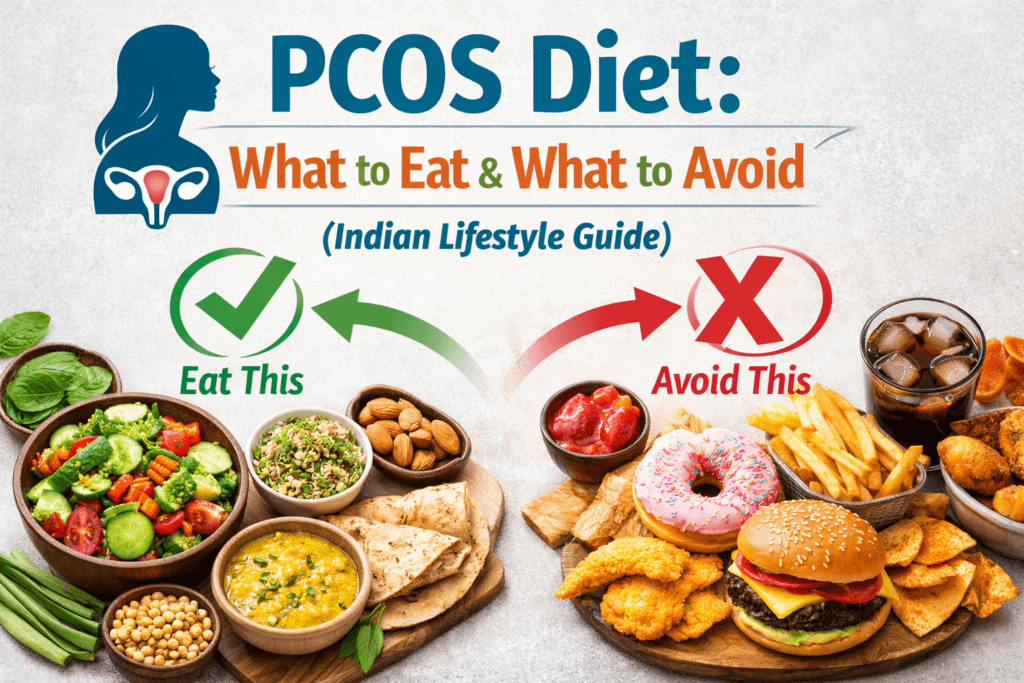
This article explains PCOS-friendly eating habits using an Indian lifestyle approach/ PCOS diet Indian style — simple, realistic, and sustainable.
Why Diet Matters in PCOS
PCOS is often linked with hormonal imbalance and insulin resistance. Because of this, food choices may influence:
- Energy levels
- Weight management
- Hormonal balance
- Cravings and hunger patterns
Instead of strict dieting, a balanced and consistent eating pattern may help support overall well-being.
Key Principles of a PCOS-Friendly Diet
Before talking about foods, it’s important to understand a few basic principles:
- Focus on balance, not restriction
- Prefer home-cooked meals
- Maintain regular meal timings
- Avoid long gaps between meals
Small changes followed consistently are often more effective than extreme diets.
Foods That May Support PCOS (Indian Diet)
1. Whole Grains
Whole grains digest slowly and may help maintain steady energy.
Examples:
- Whole wheat roti
- Brown rice (in moderate portions)
- Millets (jowar, bajra, ragi)
- Oats
2. Protein-Rich Foods
Protein supports muscle health and keeps you fuller for longer.
Indian options:
- Dal and legumes
- Paneer (in moderation)
- Curd / Greek-style yogurt
- Eggs (if you consume them)
- Sprouts
Try to include protein in every main meal.
3. Vegetables (Especially Fiber-Rich)
Vegetables add fiber, vitamins, and minerals.
Focus on:
- Green leafy vegetables
- Bottle gourd, ridge gourd, pumpkin
- Cauliflower, cabbage, carrots
Aim for half your plate to be vegetables.
4. Healthy Fats
Healthy fats support hormone production when consumed in moderation.
Examples:
- Nuts and seeds
- Groundnut oil, mustard oil
- Ghee (small quantity)
Foods to Limit in PCOS
You don’t need to completely avoid these, but moderation is key.
1. Refined Sugar
- Sweets
- Sugary drinks
- Packaged desserts
These may cause energy crashes and cravings.
2. Refined & Processed Foods
- White bread
- Bakery items
- Instant noodles
- Packaged snacks
3. Excess Fried & Oily Foods
- Deep-fried snacks
- Frequent restaurant food
Occasional intake is fine, but regular consumption may make symptoms harder to manage.
Roti or Rice: What Is Better for PCOS?
This is a very common question.
Both roti and rice can fit into a PCOS-friendly diet when eaten in proper portions.
- Prefer whole wheat roti over refined flour
- If eating rice, choose small portions and pair with protein and vegetables
- Avoid eating large quantities of rice alone
Balance matters more than completely avoiding any food.
Meal Timing Tips for PCOS
- Eat meals at regular intervals
- Avoid skipping breakfast
- Avoid late-night heavy meals
- Keep dinner lighter than lunch
Consistent meal timing may help manage cravings and energy levels.
Common Diet Mistakes Women Make in PCOS
Many women unknowingly make these mistakes:
- Skipping meals to lose weight
- Following very low-calorie diets
- Completely cutting carbs
- Frequently changing diet plans
These approaches are often hard to maintain and may increase stress on the body.
A Sustainable Eating Approach Works Best
PCOS management is not about perfection. It’s about creating eating habits that fit into your routine and cultural lifestyle.
A structured but flexible approach can make healthy eating feel less overwhelming.
If you’re looking for guided support, you may find our PCOS Lifestyle Support Program helpful. It focuses on:
- Simple Indian diet guidance
- Daily routine suggestions
- Weight management support
- Stress and habit-building tips
Explore the PCOS Lifestyle Support Program.
Final Thoughts
There is no single “perfect” PCOS diet. What matters most is consistency, balance, and choosing foods that work for your body and lifestyle.
Start small, be patient with yourself, and focus on long-term habits rather than quick fixes.
Disclaimer: This article is for educational and wellness purposes only. It is not intended to diagnose, treat, cure, or prevent any medical condition. Please consult a qualified healthcare professional for personalized medical advice.
What is the best Indian diet for PCOS?
A balanced Indian diet for PCOS includes whole grains, vegetables, protein-rich foods, healthy fats, and limited refined sugar and processed foods.
Can I eat rice if I have PCOS?
Yes, rice can be eaten in moderation. Pairing rice with protein and vegetables and controlling portion size is recommended.
Is roti better than rice for PCOS?
Whole wheat roti is often preferred due to higher fiber content, but both roti and rice can fit into a PCOS-friendly diet when balanced.
Should I completely avoid sugar in PCOS?
Complete avoidance is not necessary, but limiting refined sugar and sugary foods may help support overall health and energy balance.
Can diet alone cure PCOS?
PCOS is a long-term condition. Diet and lifestyle habits may support well-being but should complement professional medical guidance.
Looking for a Simple PCOS Lifestyle Plan?
Feeling confused about what to eat and how to manage PCOS?
Our guided PCOS lifestyle support program helps you build simple, sustainable habits without extreme dieting.